Best Disk Utility For Mac Os
How to maintain a Mac 1. Make redundant backups, keeping at least one off site at all times.
One backup is not enough. Don’t back up your backups; make them independent of each other.
Don’t rely completely on any single backup method, such as Time Machine. If you get an indication that a backup has failed, don't ignore it.
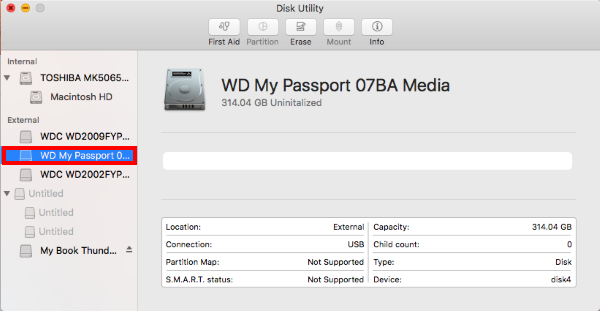
Handbrake is a free, open-source video transcoding utility. It's licensed by the GPL, available for multiple platforms (Mac OS X, Windows, and Linux), and takes full advantage of multithreading. This how-to shows you the steps using Disk Utility 13 in OS X 10.10 Yosemite, but the process is the same if you’re using OS X 10.9 Mavericks or 10.8 Mountain Lion. Although the changes to Disk Utility occurred with OS X El Capitan, these changes and the new way to work with the Disk Utility app will remain applicable to all newer versions of the Mac OS going forward, which includes macOS Sierra and macOS Mojave. Disk Utility can fix certain disk problems—for example, multiple apps quit unexpectedly, a file is corrupted, an external device doesn’t work properly, or your computer won’t start up. This topic describes how to repair the disk that started up your Mac.
Keep your software up to date. In the Software Update preference pane, you can configure automatic notifications of updates to OS X and other Mac App Store products. Some third-party applications from other sources have a similar feature, if you don’t mind letting them phone home. Otherwise you have to check yourself on a regular basis. This is especially important for complex software that modifies the operating system, such as device drivers. Before installing any Apple update, you must check that all such modifications that you use are compatible. Don't install crapware, such as “themes,” 'haxies,' “add-ons,” “toolbars,” “enhancers,' “optimizers,” “accelerators,” “extenders,” “cleaners,” 'doctors,' 'tune-ups,' “defragmenters,” “firewalls,” 'barriers,' “guardians,” “defenders,” “protectors,” most “plugins,” commercial 'virus scanners,” 'disk tools,' or 'utilities.'
With very few exceptions, this stuff is useless, or worse than useless. The more actively promoted the product, the more likely it is to be garbage. Malwarebytes for mac old version.
Disk Utility is the name of a utility, created by Apple, for performing disk-related tasks on macOS. These tasks include: The creation, conversion, compression and encryption of disk images from a wide range of formats read by Disk Utility to.dmg or.cdr, which is identical to the.iso format.
Before whatever else, it bears observing that Cyberghost is incredibly easy to use. 
The most extreme example is the “MacKeeper” scam. As a rule, the only software you should install is that which directly enables you to do the things you use a computer for — such as creating, communicating, and playing — and does not modify the way other software works. Use your computer; don't fuss with it.
Never install any third-party software unless you know how to uninstall it. Otherwise you may create problems that are very hard to solve. The free anti-malware application ClamXav is not crap, and although it’s not routinely needed, it may be useful in some environments, such as a mixed Mac-Windows enterprise network. Beware of trojans. A trojan is malicious software (“malware”) that the user is duped into installing voluntarily. Such attacks were rare on the Mac platform until sometime in 2011, but are now increasingly common, and increasingly dangerous. There is some built-in protection against downloading malware, but you can’t rely on it — the attackers are always at least one day ahead of the defense.